As the seasons change and Daylight Saving Time (DST) comes into play, your backyard chickens remain blissfully unaware of the clock adjustments. Their routines are dictated by the sun, not by human timekeeping.
This discrepancy can lead to misalignment between your automatic chicken coop door and your flock's natural schedule. Without proper adjustments, your chickens might find themselves locked out in the dark or stuck inside long after sunrise.
This guide will help you navigate these changes, ensuring your coop door operates in harmony with nature.
Understanding the Impact of Time Changes on Chickens
Chickens instinctively seek shelter as dusk approaches. Their internal clocks, governed by the pineal gland, prompt them to roost as daylight fades. When we adjust our clocks for DST, we disrupt this natural rhythm.
If your coop door operates on a fixed timer, it will continue to open and close at the same digital time, ignoring the shift in sunset and sunrise.
Autumn's "Fall Back" Hazard
In autumn, when we set our clocks back an hour, the sun sets earlier according to our clocks. A door programmed to close at 7:00 PM will still do so, but dusk now occurs at 6:00 PM.
This leaves your chickens vulnerable to predators for an hour, as they roost in the dark with the door wide open.
Spring's "Spring Forward" Challenge
Conversely, in spring, when clocks move forward, the sun rises later. A door set to open at 6:00 AM will still open at that time, but it will feel like 5:00 AM to the chickens.
This can lead to restlessness and stress as they wait in the dark, potentially causing behavioral issues like squawking or pecking.
Step-by-Step Guide to Resetting Your Coop Door
Whether you have a horizontal rolling door like the Chickcozy or a vertical gravity-fed model such as Omlet or Run-Chicken, the reset process is similar.
Step 1: Check Local Sunrise and Sunset Times
Before adjusting your door's settings, consult a reliable weather app for accurate sunrise and sunset times in your area.
Twilight durations can vary significantly based on your location, so guessing is not advisable.
Step 2: Establish Buffer Times
Avoid setting your door to open or close exactly at sunrise or sunset. Allow a buffer to accommodate slower hens or younger birds.
- Morning Open Buffer: Set the door to open 15 to 30 minutes after sunrise. This ensures it's light enough for the chickens to spot any potential threats.
- Evening Close Buffer: Set the door to close 15 to 30 minutes after sunset, giving the flock ample time to settle in before the door shuts.
Step 3: Update the System Clock
Errors often occur when the system clock isn't updated along with the open/close times.
- Activate the control unit's screen (on models like Chickcozy, a long press may be required).
- Access the Time/Clock Settings.
- Adjust the time forward or backward by one hour to align with your smartphone.
- Save the new time setting before adjusting the operational schedule.
Seasonal Programming Recommendations
To ensure the safety of your flock and maintain egg quality, adjust your door's settings according to these seasonal guidelines:
| Season | Mode | Morning Open | Evening Close |
|---|---|---|---|
| Spring/Summer | Light Sensor/Timer | 6:00 AM – 6:30 AM | 30 minutes after local sunset |
| Autumn/Winter | Timer Only | 8:00 AM – 8:30 AM | 15 minutes after local sunset |
Embracing Light Sensor Mode
If manual resets are a hassle, consider switching to Light Sensor Mode. This mode uses ambient light levels to operate, automatically adjusting to seasonal changes and DST without human intervention.
Considerations for Light Sensor Mode
While convenient, Light Sensor Mode has its own challenges:
- Weather Sensitivity: Overcast skies or storms can trick the sensor into closing the door prematurely.
- Snow Reflection: In snowy regions, sunlight reflecting off snow can delay door closure.
- Maintenance Needs: Regularly clean the sensor to prevent dust or debris from affecting its accuracy.
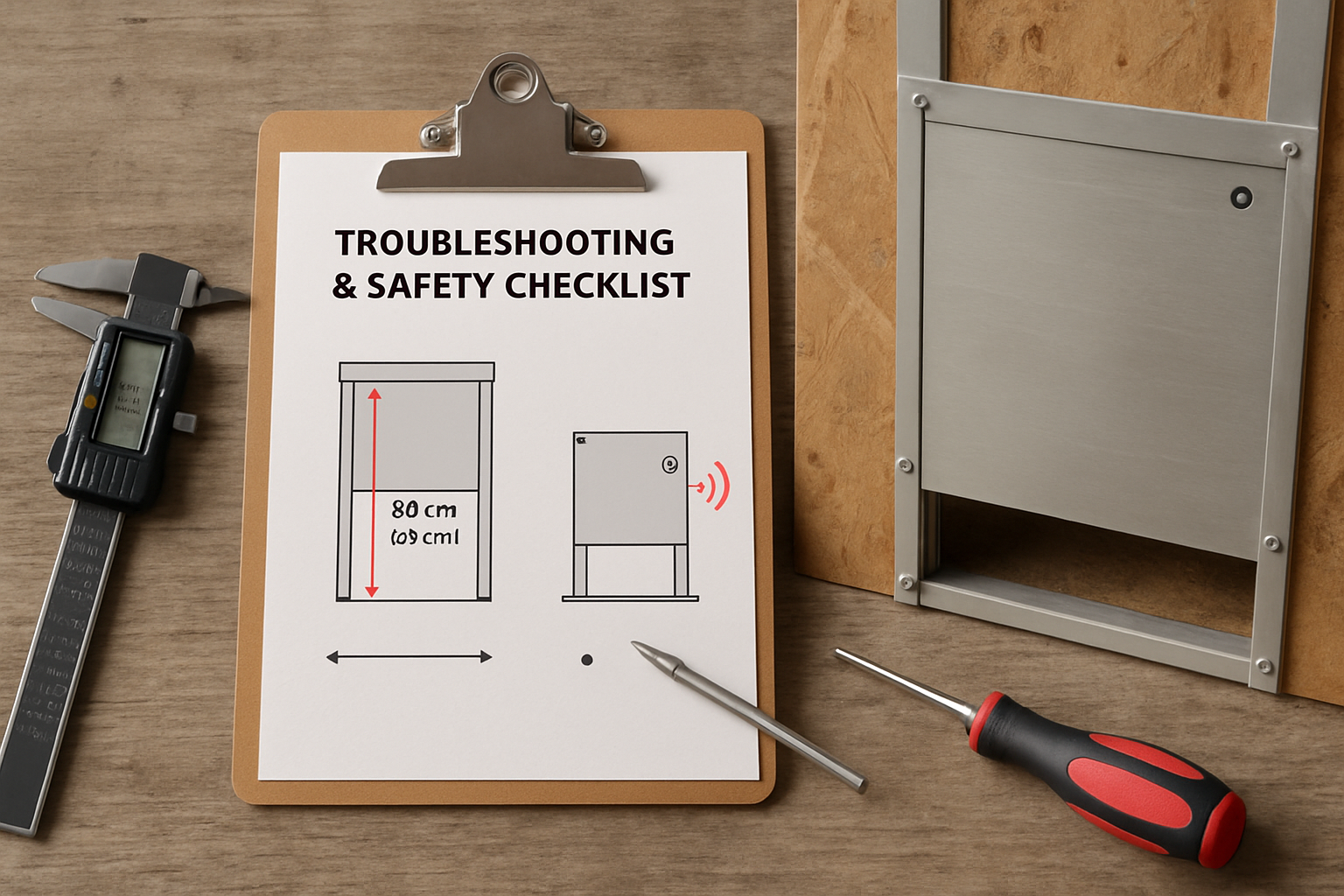
Troubleshooting and Safety Checklist
After making changes, ensure your door's settings are correctly implemented. Don't leave for the weekend without verifying the updates.
- [ ] Check AM/PM Settings: Ensure the morning open time is set to AM and the evening close time to PM. If available, use a 24-hour format to avoid confusion.
- [ ] Conduct a Manual Test: Perform a manual open and close cycle to confirm the system is functioning correctly.
- [ ] Monitor the First Night: On the first evening after a reset, check that the door closes properly and no chickens are left outside.
By aligning your coop door's schedule with the natural light cycle, you protect your flock from predators and enjoy the convenience of automated poultry management.
Adjusting for DST ensures your chickens are safe and stress-free, regardless of the season.