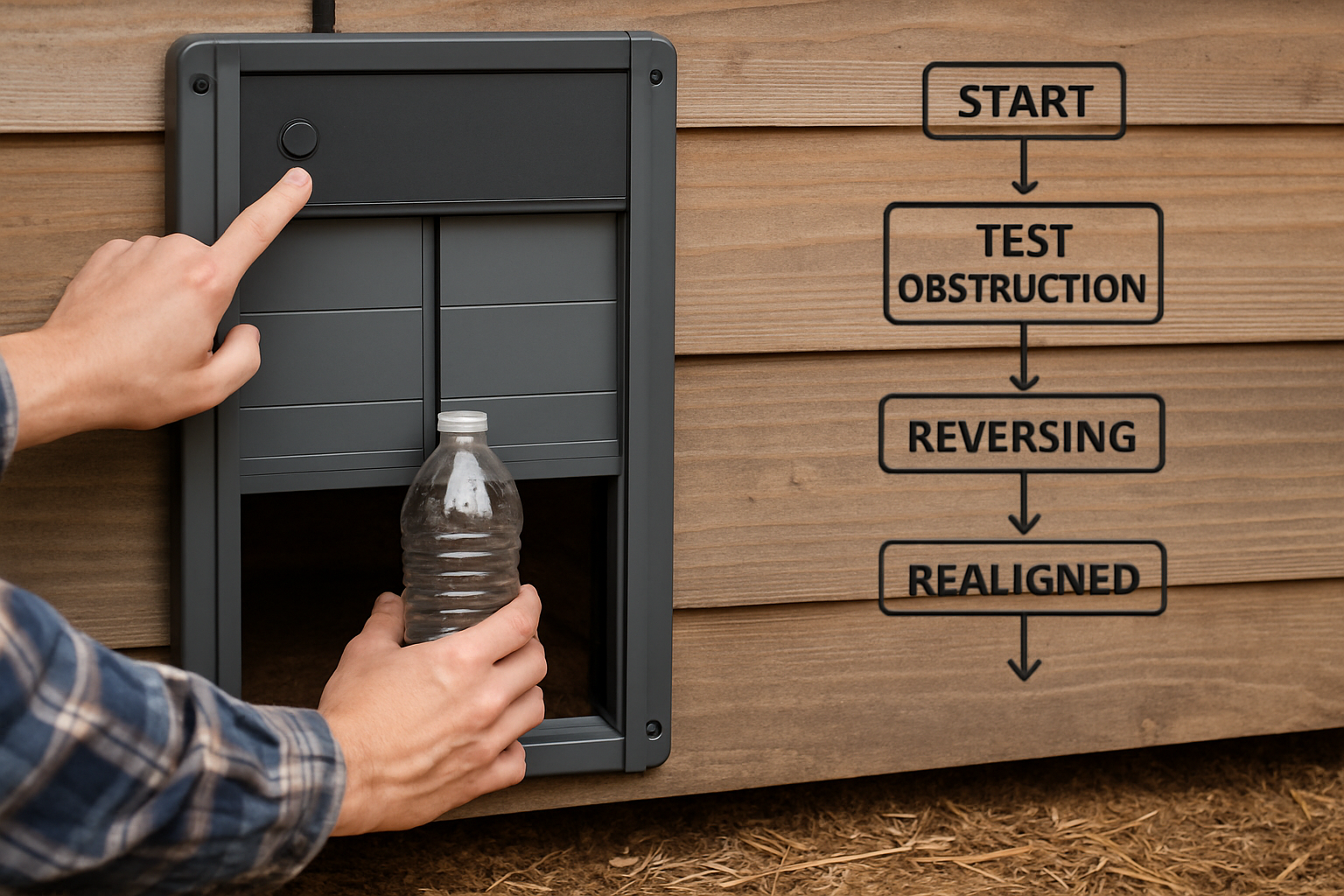
The Chickcozy Automatic Chicken Coop Door stands out with its innovative horizontal rolling design, which opens and closes from the center, similar to elevator doors. This design eliminates the risk of the traditional vertical "guillotine" doors that can drop suddenly.
However, even horizontal doors can pose a risk if the safety features are not functioning correctly. Chickcozy doors use electronic current-sensing safety logic to prevent accidents.
When the door encounters resistance, such as a chicken in the way, the motor detects a spike in electrical resistance, stops, and reverses direction.
To ensure your Chickcozy door is properly calibrated and safe for your flock, it's essential to conduct regular safety reverse tests. Below is a comprehensive guide to testing and calibrating your Chickcozy safety sensor.
🔍 1. How to Perform the "Soft Obstruction" Safety Test
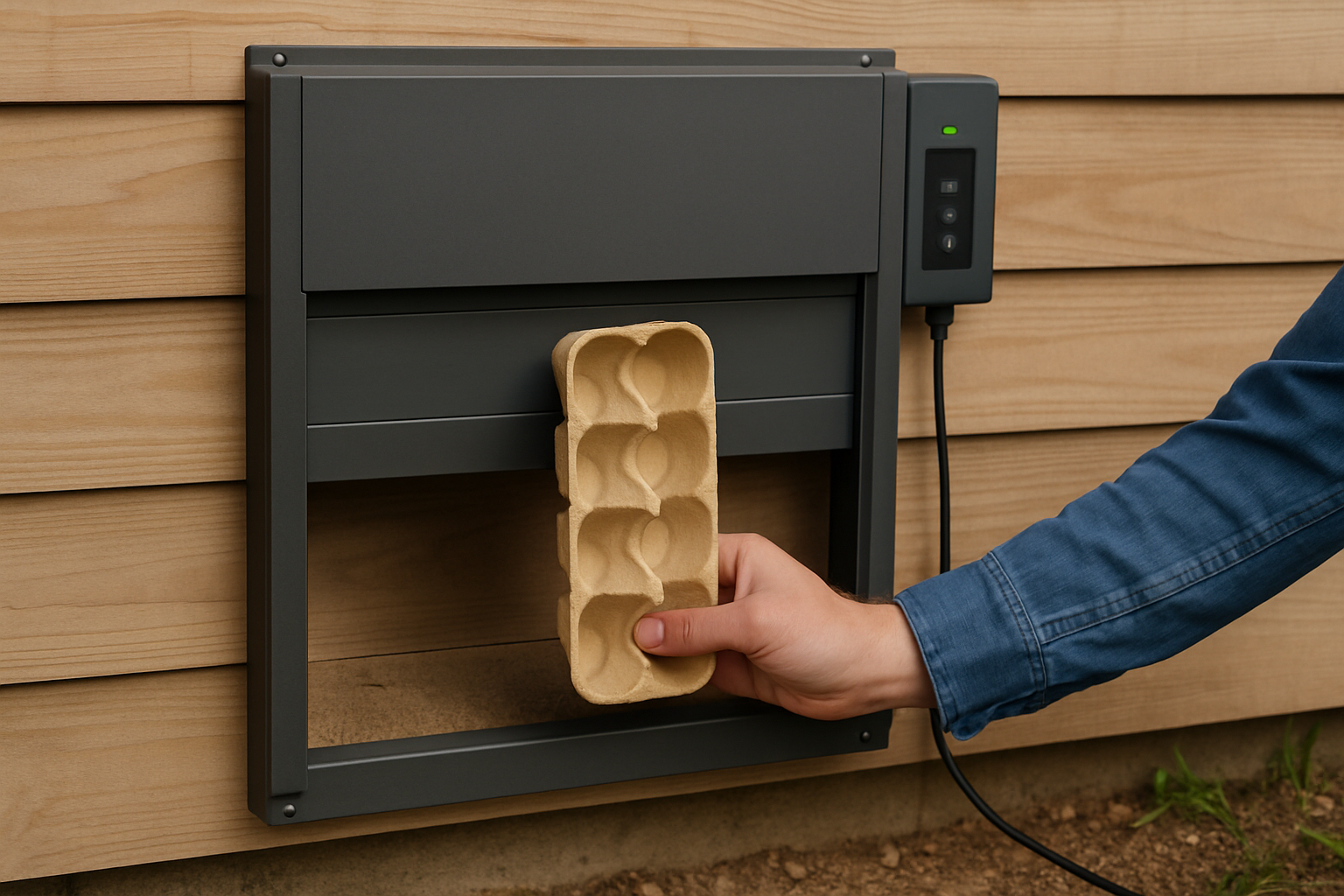
Testing your Chickcozy door's safety feature requires care. Avoid using hard objects like your hand, wooden blocks, or metal tools, as they can damage the door's components before the sensor can react. Instead, simulate the soft body of a chicken.
- Test Material: Use an empty, upright cardboard egg carton or a soft, slightly crumpled empty plastic water bottle.
- Execution: Manually trigger the Chickcozy door to close using the control panel. As the door begins to close, place the egg carton or plastic bottle in the center of the opening path.
- Evaluation: The door should touch the item, compress it slightly, and then stop and reverse completely open within 1 to 2 seconds. If the door crushes the carton or continues to press against the obstruction, the safety sensor needs calibration.
⚙️ 2. How to Calibrate a Chickcozy Door That Fails the Test
If the door fails the soft obstruction test, it may be due to the internal microchip losing track of its boundaries or a corrupted memory of the motor's electrical resistance. A factory calibration reset is necessary to recalibrate the door.
Step-by-Step Onboard Calibration Reset:
- Clean the Tracks First: Ensure the horizontal guide rails are free of debris before resetting. Dirty tracks can cause the door to calibrate incorrectly, reducing sensor sensitivity.
- Access Calibration Mode: Find the calibration settings on your Chickcozy model. Press and hold the calibration/menu button as per your manual until the screen flashes or enters setup mode.
- Run the Travel Limit Cycle: Start the automatic calibration cycle. The door will open fully and then close slowly.
- Baseline Calculation: During this cycle, the computer measures the electrical current needed to move the door and sets the safety trigger slightly above this baseline.
- Re-Test: After the cycle, repeat the cardboard egg carton test to ensure the safety reverse function activates correctly.
🧼 3. Eliminating "Friction Blindness" from Horizontal Scroll Tracks
A common issue with Chickcozy doors is friction blindness. Dust, feathers, and dried mud can accumulate in the scroll tracks, causing the motor to work harder. This buildup can prevent the safety sensor from detecting a chicken in the door's path.
- The Fix: Use an old toothbrush or stiff nylon brush to clean the upper and lower guide grooves. Remove debris with a dry cloth.
- Maintenance Warning: Avoid using wet lubricants like WD-40 or motor oil. These attract dirt, creating an abrasive paste that can damage the gears. Keep tracks dry or use dry graphite powder if lubrication is necessary.
📊 Summary: Chickcozy Safety Performance Checklist
| Step | Action Required | Expected Behavior / Outcome |
|---|---|---|
| 1. Soft Block Test | Place a cardboard egg carton in the closing path of the center scrolls. | The door must halt and reverse completely open within 1–2 seconds. |
| 2. Track Cleaning | Scrub out the top and bottom guide rails with a dry nylon brush. | Removes dander and dirt, eliminating "friction blindness". |
| 3. Factory Reset | Initiate the automatic open/close calibration sequence via the menu. | Forces the microchip to re-learn its exact physical boundaries and motor limits. |
| 4. Maintenance Check | Inspect the horizontal scrolls for warped plastic or deep scratches. | Ensures the door can glide smoothly without triggering false safety loops. |
🐔 4. Additional Tips for Maintaining Your Chickcozy Door
Regular maintenance is key to ensuring the longevity and safety of your Chickcozy door. Here are some additional tips:
- Weekly Inspection: Check the door's alignment and ensure there are no obstructions in the tracks.
- Monthly Cleaning: Perform a thorough cleaning of the door and tracks to prevent buildup.
- Seasonal Calibration: Recalibrate the door at the start of each season to account for temperature changes that may affect the door's operation.
🔧 5. Troubleshooting Common Issues
Even with regular maintenance, issues can arise. Here are some common problems and solutions:
- Door Doesn't Close Fully: Check for obstructions in the tracks and ensure the door is properly calibrated.
- Door Reverses Without Obstruction: This may indicate a sensitivity issue. Recalibrate the door to adjust the sensor settings.
- Unusual Noises: Inspect the door for debris or damage and clean the tracks thoroughly.
By following these guidelines, you can ensure your Chickcozy door operates safely and efficiently, providing peace of mind for you and protection for your flock. Regular testing and maintenance are important to prevent accidents and prolong the life of your automatic chicken coop door.
🌡️ 6. Environmental Considerations for Chickcozy Doors
Environmental factors can significantly impact the performance of your Chickcozy door. Understanding these variables can help maintain optimal operation.
- Temperature Fluctuations: Extreme cold can cause plastic components to become brittle, while high heat may lead to expansion. Ensure the door is calibrated to accommodate these changes, especially during seasonal transitions.
- Humidity Levels: High humidity can lead to condensation, which may cause electrical components to malfunction. Ensure the coop is well-ventilated to prevent moisture buildup.
- Wind and Debris: Strong winds can blow debris into the tracks, increasing friction. Regularly inspect and clean the tracks to prevent blockages.
🔍 7. Component-Level Diagnostics
Understanding the individual components of your Chickcozy door can aid in troubleshooting and maintenance.
- Motor Functionality: The motor should operate smoothly without excessive noise. If the motor struggles, it may indicate a need for recalibration or cleaning.
- Sensor Accuracy: Test the sensor's responsiveness regularly. A delay in the safety reverse function could suggest sensor misalignment or dirt interference.
- Gear Integrity: Inspect the plastic gears for signs of wear or damage. Replace any compromised gears to prevent operational failure.
🛠️ 8. Installation Variables and Best Practices
Proper installation is important for the effective functioning of your Chickcozy door. Consider these best practices:
- Level Installation: Ensure the door is installed on a level surface to prevent uneven wear on the tracks and gears.
- Secure Mounting: Use appropriate hardware to securely mount the door, preventing vibrations that could affect sensor accuracy.
- Power Supply Stability: Ensure a stable power supply to avoid fluctuations that could disrupt the door's operation. Consider using a surge protector to safeguard against electrical spikes.
By addressing these factors, you can enhance the reliability and safety of your Chickcozy door, ensuring it remains a dependable solution for your chicken coop.