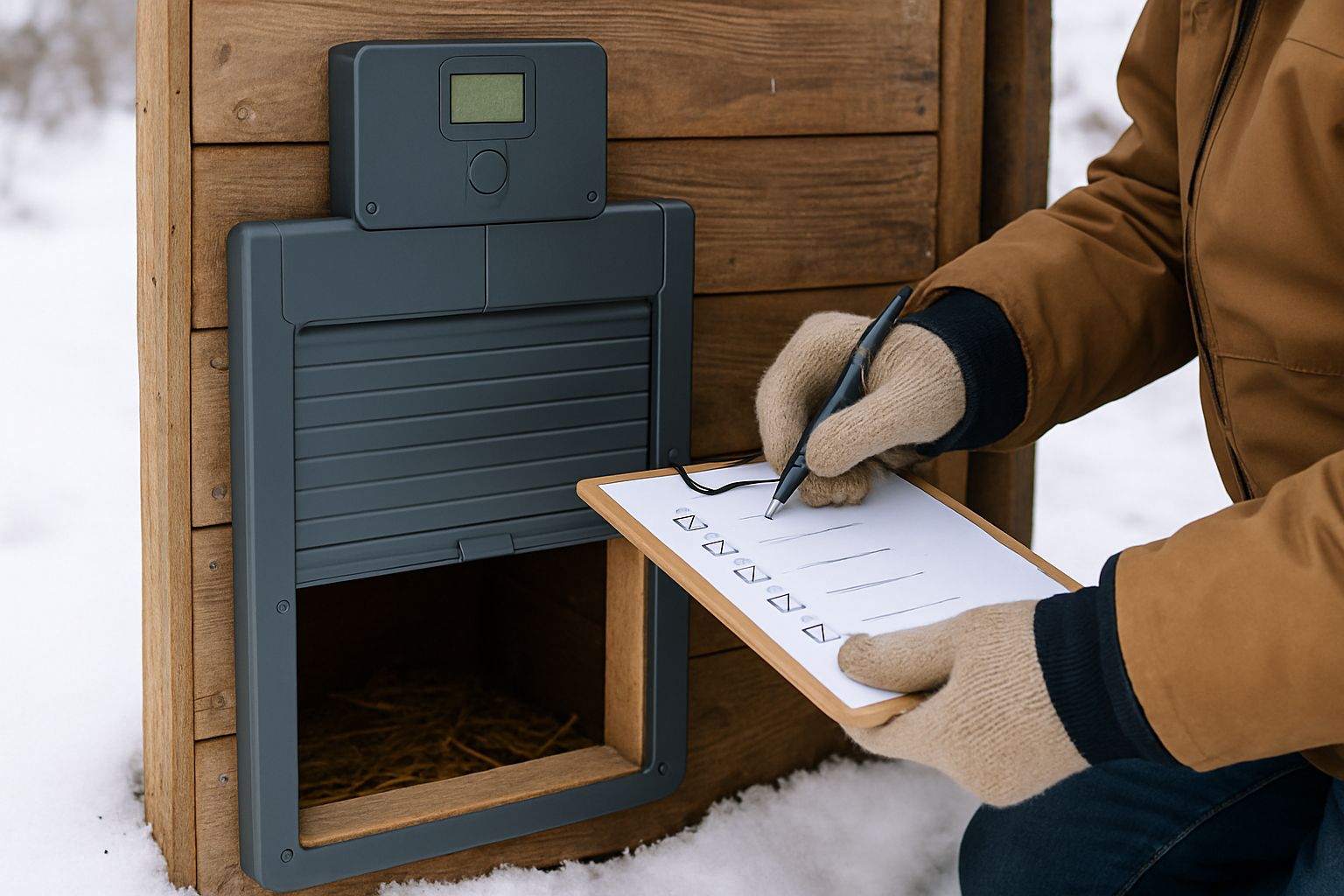
Caring for your backyard chickens during the harsh winter months requires a blend of strategic planning, reliable equipment, and consistent management.
Among the essential tools for modern poultry care in cold climates is the Chickcozy Automatic Chicken Coop Door. Its innovative horizontal, center-out rolling design effectively addresses many of the freezing and tracking issues that often affect traditional vertical, gravity-fed guillotine doors.
Operating any automated device in extreme cold—where temperatures can plummet from 0°F to -20°F (-18°C to -29°C) or lower—requires specific programming and hardware adjustments. A proactive approach ensures both seamless mechanical functionality and the safety of your birds when the weather turns severe.
This guide will help you optimize your Chickcozy door settings for severe winter conditions, manage your power supply and hardware in harsh weather, and integrate the device into an effective winter coop strategy.
Selecting Optimal Settings for Cold Weather
The Chickcozy door offers two primary operating modes via an intuitive LCD screen: Light Sensor Mode and Timer Mode. In sub-zero climates, choosing the right mode and calibrating it accurately is crucial for your flock's safety.
Timer Mode: A Winter Essential
While Light Sensor Mode is convenient during warmer months, Timer Mode is preferable for winter.
- Challenges with Light Sensors in Winter: Heavy snowstorms, overcast skies, and snow accumulation can easily mislead a light sensor. The door might close prematurely during a dark afternoon blizzard, leaving your hens exposed to freezing winds. Conversely, bright reflections off snow can delay closure, exposing your flock to predators and cold.
- Benefits of Timer Mode: Timer Mode offers precise control over door operations. You can synchronize the door with feeding schedules or your evening routine, ensuring your flock is secure.
Recommended Programming for Sub-Zero Temperatures
| Action | Recommended Winter Time | Reasoning |
|---|---|---|
| Morning Open | 8:00 AM – 8:30 AM (or 30 mins after sunrise) | Allows the coldest dawn temperatures to pass, preventing frostbite. |
| Evening Close | 4:30 PM – 5:00 PM (or 15 mins after sunset) | Ensures birds are roosting together for warmth before the door closes. |
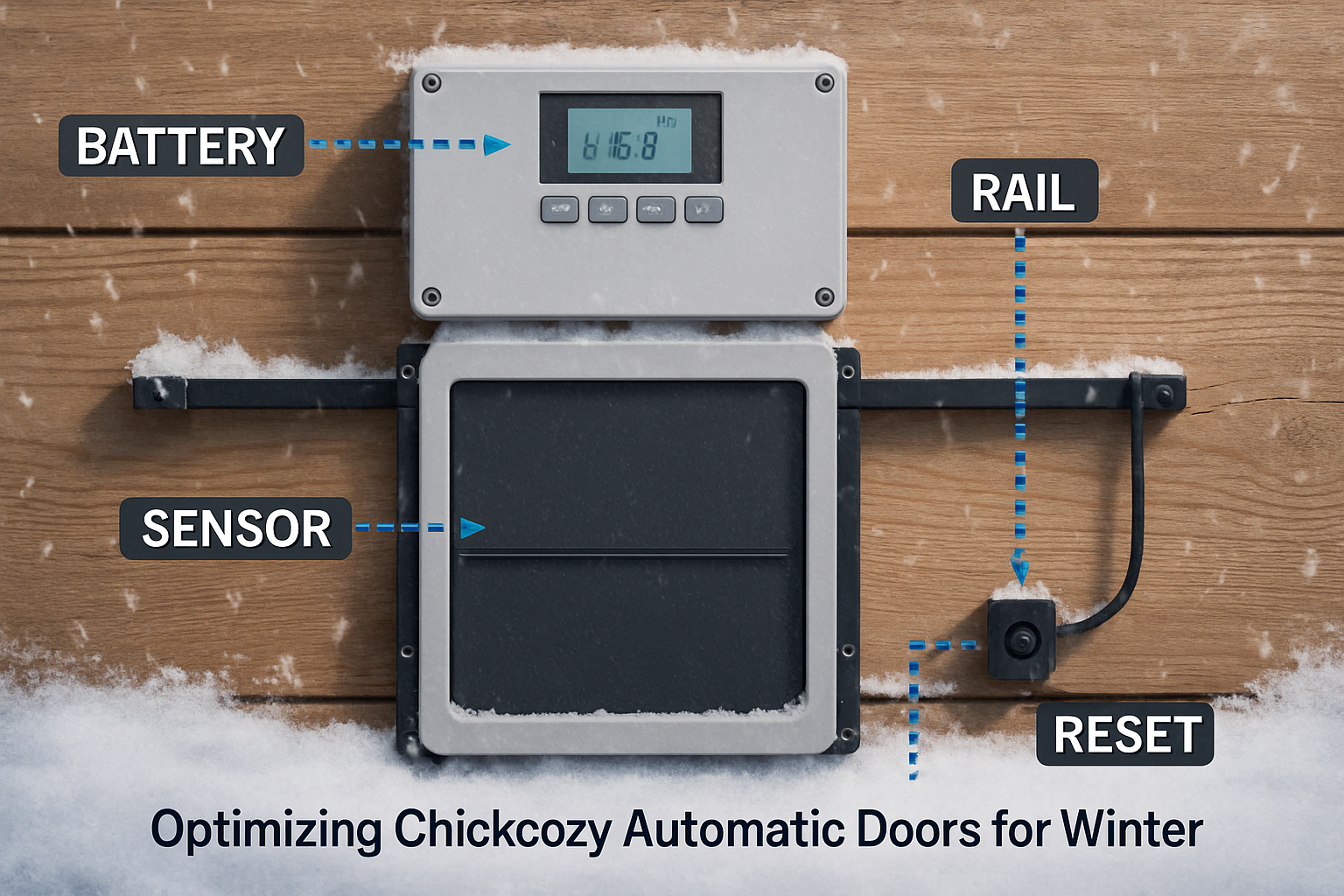
💡 Tip: Adjust settings during the warmest part of the day. LCDs slow down in the cold, making programming difficult at -10°F.
Protecting Eggs from Freezing
In extreme winter climates, freshly laid eggs can freeze and crack within 15 to 30 minutes if exposed to cold drafts. Timing your automated door is crucial to prevent this.
- The 10:00 AM Rule: Delay the morning open time to 9:30 AM or 10:00 AM during severe cold snaps. This keeps the coop insulated during peak laying hours.
- Preventing Floor Laying: Keeping the door closed later encourages hens to lay in insulated nesting boxes rather than outside, where eggs can freeze.
Adjusting Light Sensor and Lumen Settings
If Timer Mode isn't feasible due to an unpredictable schedule, Light Sensor Mode can work with careful adjustments to the Lumen Settings.
- Opening: Increase the opening delay or require a higher lumen value to prevent the door from opening at dawn when temperatures are lowest.
- Closing: Set a higher closing lumen threshold. Winter twilight fades quickly, and waiting for darkness can expose your flock to cold and predators.
🛠️ Maintenance Tip: Regularly clear frost and snow from the control box lens. A blocked sensor will keep the door shut.
Managing Power in Cold Weather
Cold temperatures can severely affect battery performance. As temperatures drop below 32°F (0°C), battery efficiency decreases significantly.
Battery-Powered Models: Choosing the Right Type
- Avoid Alkaline Batteries: These lose up to 50% capacity in sub-zero temperatures and may leak when frozen.
- Opt for Lithium Batteries: Use Energizer Ultimate Lithium AA batteries. They maintain stable voltage output down to -40°F, preventing motor stalls.
Solar-Powered Models: Maximizing Efficiency
The Chickcozy Solar-Powered Auto Door features an ETFE solar panel and a 3200mAh rechargeable battery.
- Panel Positioning: Angle the solar panel toward the southern sky to capture winter sun rays.
- Snow Management: Clean the panel daily. Even light snow can block light rays, stopping charging.
- Battery Monitoring: Monitor battery levels. If prolonged cloudy weather drops the battery below 10%, charge it indoors via USB.
Winterizing Hardware and Mechanics
The Chickcozy door’s horizontal design is advantageous in freezing conditions, but maintenance is still necessary.
Preventing Ice Buildup & Hoar Frost
Condensation-driven ice accumulation is a major threat. Warm, humid air from the coop can freeze on external components, forming hoar frost.
- Daily Checks: Clear frozen mud, iced bedding, or straw from sliding paths.
- Use Dry Lubricants: Avoid wet lubricants like WD-40. Use dry silicone spray or graphite powder to prevent ice bonding.
Understanding the Anti-Pinch Safety Sensor & Hard Resets
Ice storms can trigger the safety mechanism, requiring a hard reset to recalibrate the motor.
Performing a Cold-Weather Hard Reset:
- Clear snow, frost, and debris from the doorway and tracks.
- Hold the main control button for 15 seconds.
- Watch the indicator light cycle through its diagnostic loop (green, red, blue).
Structural Modifications: Building a Coop "Mudroom"
If your coop faces prevailing winter winds, consider structural modifications to protect the door.
The Awning Overhang
Install a small canopy above the door to prevent snow and ice from freezing the panels.
The Exterior Windbreak Tunnel
Build a mini "mudroom" or entry tunnel to block direct winds and snow drifts.
Integrating the Door with Winter Coop Management
An automated door is only as effective as the coop environment it protects.
Balancing Ventilation and Drafts
Excess humidity, not cold, is the main cause of frostbite. Ensure proper ventilation.
- High Ventilation: Keep ventilation openings above the chickens' heads to allow moisture to escape.
- Draft Prevention: Seal gaps near the floor and around the door frame to prevent drafts.
Safe Supplemental Heat Options
For vulnerable flock members, consider a safe radiant heat source like the Chickcozy Smart Chicken Coop Heater.
Comprehensive Winter Maintenance Checklist
Ensure your Chickcozy system operates smoothly with this maintenance routine:
- [ ] Daily: Clear snow or frost from the door, solar panel, and sensor box.
- [ ] Weekly: Check for ice formations that could trigger the safety sensor.
- [ ] Monthly: Test battery voltage and clear frozen debris outside the threshold.
- [ ] Seasonal: Switch from Light Sensor Mode to Timer Mode before the first freeze.
By implementing these adjustments and maintaining a clean mechanical path, your Chickcozy door will reliably protect your flock from winter's harshest conditions, ensuring they remain warm, dry, and safe.