Raccoons, with their masked faces and nimble paws, may seem like harmless creatures. However, for those who keep backyard poultry, these animals are formidable adversaries.
Unlike other predators such as foxes or coyotes, raccoons rely on their dexterous front paws to solve problems and access food sources. This makes them particularly adept at breaking into chicken coops, especially those with poorly designed automatic doors.
Understanding the Raccoon Threat
Raccoons are equipped with several features that make them a unique threat to automatic chicken coop doors. Their paws are incredibly sensitive, with four to five times more sensory receptors than human hands.
This allows them to “see” through touch, even in the dark. While they don’t have true opposable thumbs, their five digits can manipulate objects with surprising precision.
When a raccoon encounters a closed automatic door, it doesn’t simply give up. Instead, it searches for weaknesses, sliding its claws along edges, pushing against panels, and trying to wedge its paws into gaps. This relentless probing can lead to successful break-ins if the door is not properly secured.
Common Vulnerabilities in Automatic Doors
Many budget-friendly automatic chicken coop doors are vulnerable to raccoon attacks due to several design flaws. Understanding these vulnerabilities is crucial for protecting your flock.
Flaw A: Cable-and-Pulley Systems
Many automatic doors use a cable-and-pulley system to lift and lower the door. When the door is closed, the cable often has slack, making it easy for a raccoon to lift the door by sliding its claws underneath. Even if the door is heavy, a raccoon only needs to lift it a few inches to squeeze through.
Flaw B: Weak Materials
Doors made from flimsy materials like PVC or thin aluminum are susceptible to raccoon attacks. These animals are strong and can push, pull, and scratch at the door until it bends or pops out of its tracks, leaving the coop exposed.
Flaw C: Exposed Controls
Some doors have exposed control buttons that raccoons can accidentally trigger. While rare, there have been instances where raccoons have opened doors by pressing these buttons repeatedly.
Selecting a Raccoon-Proof Automatic Door
To ensure your automatic door can withstand raccoon attacks, it should incorporate one of several secure mechanical designs.
Mechanism 1: Self-Locking Wing Systems
Doors with self-locking wing systems, like those from ChickenGuard, use mechanical locks that engage when the door closes. These locks prevent the door from being lifted, as any upward force is transferred to the coop’s frame.
Mechanism 2: Non-Back-Drivable Worm Drives
Worm drives use a screw-shaped gear to move the door. This design is non-back-drivable, meaning that external force cannot turn the gear. Brands like Coop Tender use this mechanism to ensure the door remains locked in place.
Mechanism 3: Rigid Direct-Drive Gears
Direct-drive systems, such as the Run-Chicken Model T50, connect the motor directly to the door panel. This eliminates slack and holds the door firmly in place, making it difficult for raccoons to lift.
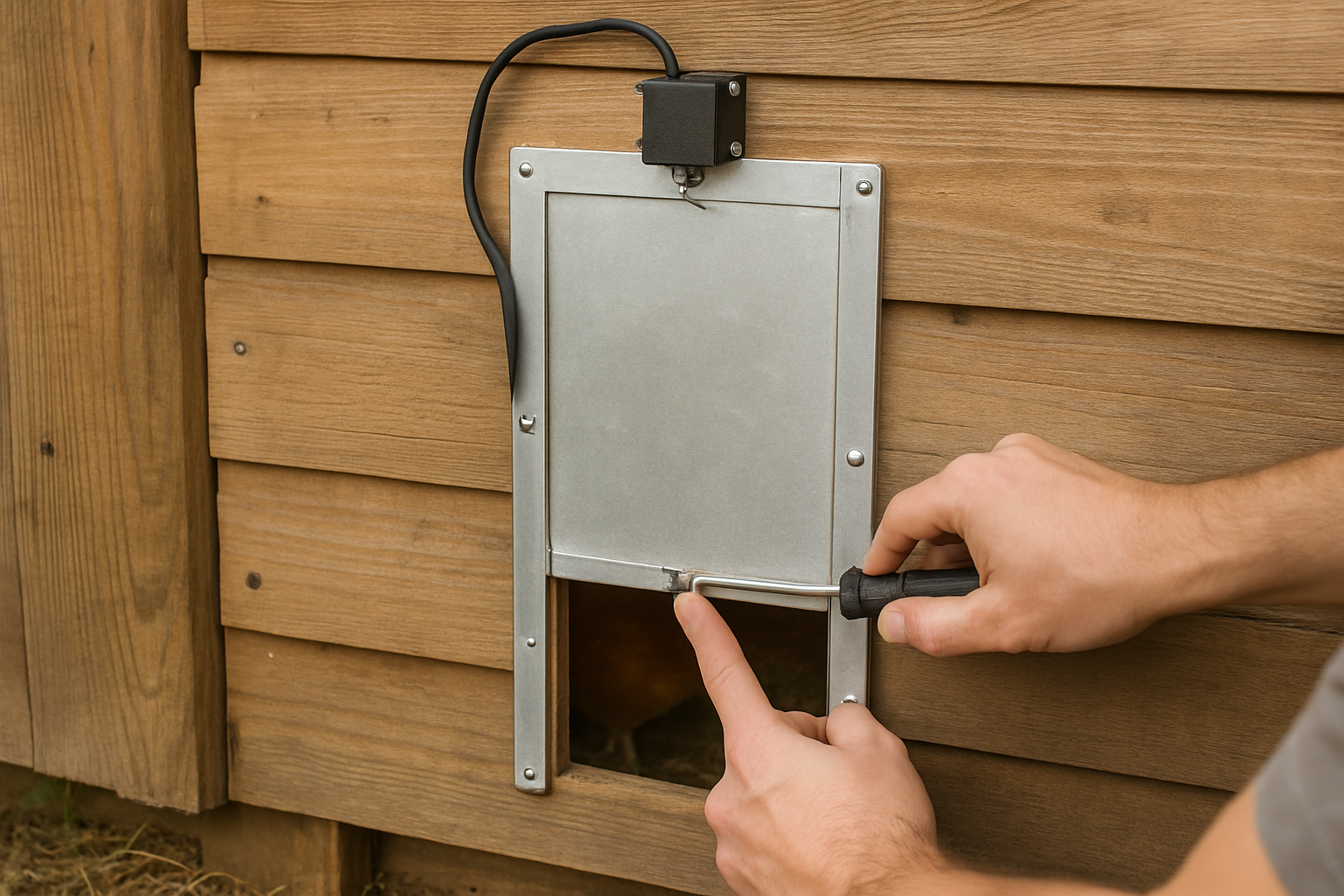
Evaluating Door Security
Before purchasing an automatic door, consider how different designs fare against raccoon attacks. The following table provides a comparison of various door mechanisms and their security ratings.
| Door Mechanism Type | Example Brands | Raccoon Security Rating | Attack Survival Method |
|---|---|---|---|
| Worm Drive (Steel) | Coop Tender | 🟢 Excellent (10/10) | Mechanically locked; cannot be back-driven or bent. |
| Self-Locking Wings | ChickenGuard Pro | 🟢 Excellent (9/10) | Locks engage with side frames, preventing lifting. |
| Direct-Drive Metal | Run-Chicken T50 | 🟡 Good (8/10) | Gear resistance holds the door down; no slack. |
| Horizontal Roll-up | Chickcozy Solar | 🟡 Good (7/10) | Eliminates bottom leverage point, though material may flex. |
| Basic Gravity String-Lift | Cheap Amazon Clones | 🔴 Unsafe (2/10) | Easily lifted; tracks can warp and pop out. |
Enhancing Coop Security
An automatic door is only part of the solution. To fully protect your chickens, consider these additional security measures:
- Flush-Mount Installation: Ensure the door frame is flush with the coop wall to prevent raccoons from prying it off.
- Use Hardware Cloth: Secure the coop with 1/2-inch galvanized hardware cloth instead of chicken wire, which raccoons can easily tear through.
- Conceal Controls: If your door has external controls, mount them inside the coop or cover them with a secure latch to prevent raccoon access.
- Install a Dig Apron: Extend hardware cloth 12 inches into the ground and outward around the coop to prevent raccoons from digging underneath.
By understanding raccoon behavior and choosing the right door design, you can protect your flock from these clever predators. Implementing additional security measures will further ensure that your chickens remain safe from harm.
🧩 Component-Level Diagnostics for Automatic Doors
Understanding the specific components of an automatic chicken coop door can help identify potential vulnerabilities and ensure optimal security against raccoon attacks. Each part of the door system plays a critical role in its effectiveness.
Motor and Gear Systems
The motor is the heart of the automatic door, responsible for opening and closing the panel. High-torque motors paired with robust gear systems, such as worm drives or direct-drive gears, provide the necessary force to resist external manipulation. Regular maintenance checks should include ensuring the motor operates smoothly without unusual noises, which could indicate wear or misalignment.
- Recommendation: Opt for motors with a high torque rating and gears made from durable materials like steel or reinforced nylon to withstand raccoon tampering.
Door Panel Materials
The material of the door panel significantly impacts its resistance to raccoon attacks. Solid aluminum or steel panels offer superior strength compared to PVC or thin plastic, which can bend or break under pressure.
- Recommendation: Choose door panels made from thick, corrosion-resistant metals to prevent bending and ensure long-term durability.
Sensor and Control Interfaces
Sensors and control interfaces are crucial for the door’s automated functions. However, exposed buttons or poorly shielded sensors can be manipulated by raccoons. Ensure that all external interfaces are either hidden or protected by a secure cover.
- Recommendation: Use tamper-proof covers for control panels and ensure sensors are calibrated to avoid false triggers from environmental factors like wind or rain.
🌿 Environmental Edge Cases and Considerations
Automatic chicken coop doors must operate reliably under various environmental conditions. Understanding these edge cases can help in selecting and maintaining a door that performs well year-round.
Weather Resistance
Doors must withstand rain, snow, and extreme temperatures. Weatherproofing seals and coatings can prevent moisture ingress, which could lead to rust or electrical failures.
- Recommendation: Look for doors with IP-rated weatherproofing and UV-resistant coatings to ensure longevity in harsh climates.
Power Supply and Backup Systems
Automatic doors typically rely on electricity, either from mains power or solar panels. Power interruptions can leave doors open or closed, compromising security.
- Recommendation: Install a battery backup system to ensure the door operates during power outages. Solar-powered systems should include a battery with sufficient capacity to handle multiple days of low sunlight.
Wildlife and Pest Interference
Beyond raccoons, other wildlife and pests can interfere with door operation. Birds, rodents, and insects might nest in or around the door mechanism, causing blockages or damage.
- Recommendation: Regularly inspect and clean the door mechanism to prevent wildlife interference. Consider installing deterrents like mesh screens to keep pests away.
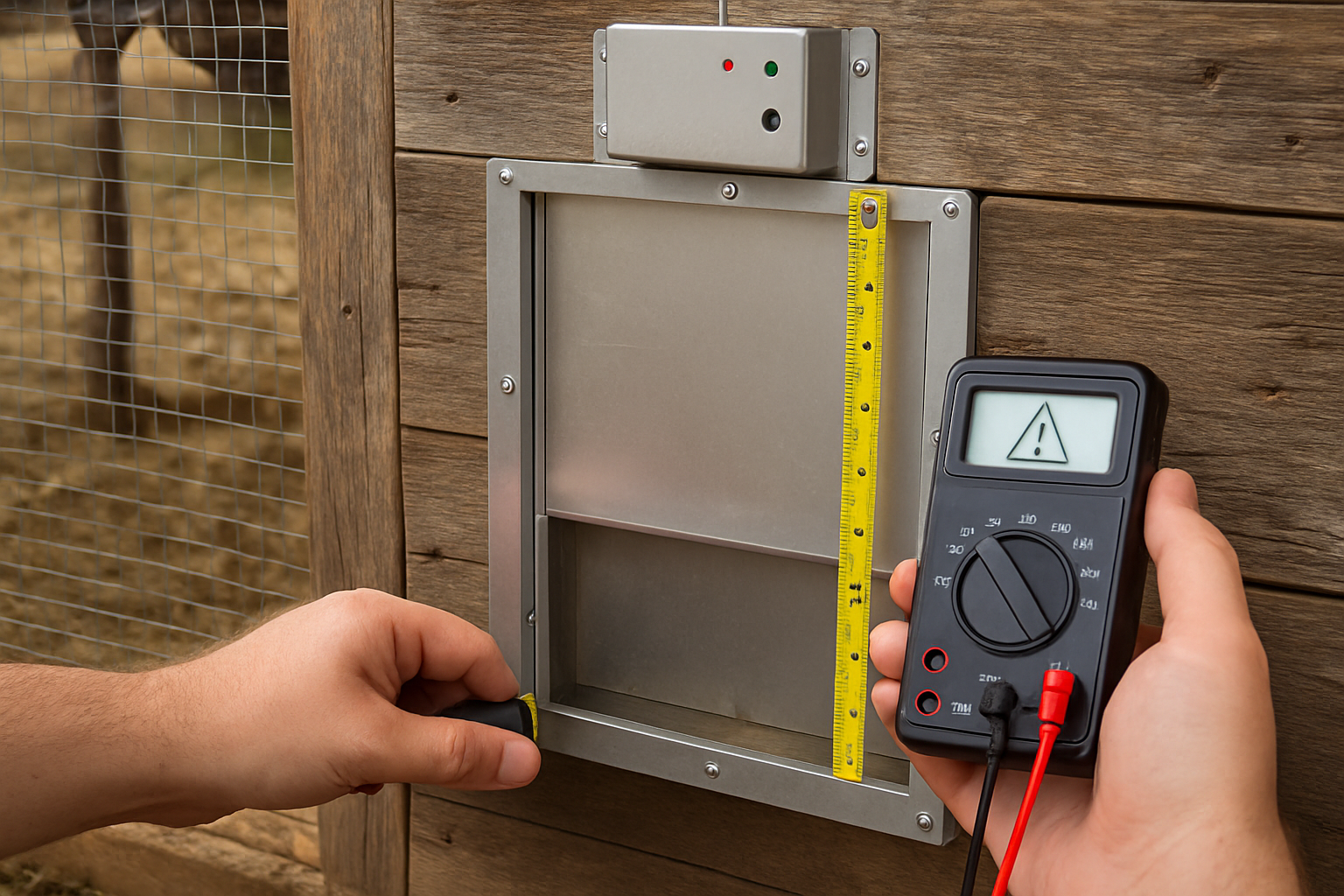
🔍 Field Checks and Maintenance Protocols
Routine inspections and maintenance are essential to keep automatic doors functioning correctly and securely. Establishing a regular protocol can prevent unexpected failures and enhance security.
Monthly Inspection Checklist
- Visual Inspection: Check for visible damage or wear on the door panel, tracks, and motor housing.
- Operational Test: Manually cycle the door to ensure smooth operation and listen for unusual sounds.
- Lubrication: Apply appropriate lubricants to moving parts to reduce friction and wear.
- Electrical Check: Test the power supply and backup systems to ensure they are functioning correctly.
Seasonal Adjustments
Adjustments may be necessary to accommodate seasonal changes, such as temperature fluctuations that can affect material expansion and contraction.
- Recommendation: In colder months, ensure that door tracks are free of ice and debris. In warmer months, check for overheating components.
Emergency Protocols
Develop an emergency protocol for door malfunctions, including manual override procedures and contact information for technical support.
- Recommendation: Keep a manual override tool accessible and ensure all family members or farm staff are trained in its use.
By implementing these diagnostics, environmental considerations, and maintenance protocols, you can enhance the security and reliability of your automatic chicken coop door, ensuring it remains raccoon-proof and functional throughout the year.
https://www.youtube-nocookie.com/embed/cSEkOOPRFzA
Supplemental video for 🔍 Field Checks and Maintenance Protocols; use it to compare the article’s written checklist against a real-world coop-door walkthrough before changing settings or hardware.