Automated chicken coop doors require reliable battery performance in sub-zero temperatures to ensure livestock safety. Standard alkaline batteries suffer significant voltage drops when temperatures fall below freezing, whereas lithium batteries maintain stable performance in extreme cold.
Core Answer
For automated coop doors operating in sub-zero environments, lithium batteries, particularly lithium iron disulfide, outperform standard alkaline alternatives. Alkaline batteries use a water-based electrolyte that freezes at -20°C (-4°F), causing voltage to drop below the motor's operational threshold. In contrast, lithium batteries maintain stable voltage output down to -40°C (-40°F), ensuring consistent motor function.
Technical Specification Snapshot
| Battery Performance Metric | Alkaline Chemistry (AA) | Lithium Chemistry (Energizer Ultimate) |
|---|---|---|
| Lower Thermal Limit | -20°C (-4°F) | -40°C / -40°F |
| Voltage Stability Drop | Rapid drop-off below 0°C (32°F) | Flat 1.5V curve until exhaustion |
| Electrolyte Material | Aqueous Potassium Hydroxide | Lithium Iron Disulfide (Li-FeS₂) |
| Risk of Cell Leakage | High (Corrodes contact plates in cold) | None |
| Best Operational Context | Mild climates / Spring & Summer | Extreme cold / Deep winter freezes |
Sub-Zero Failure Physics
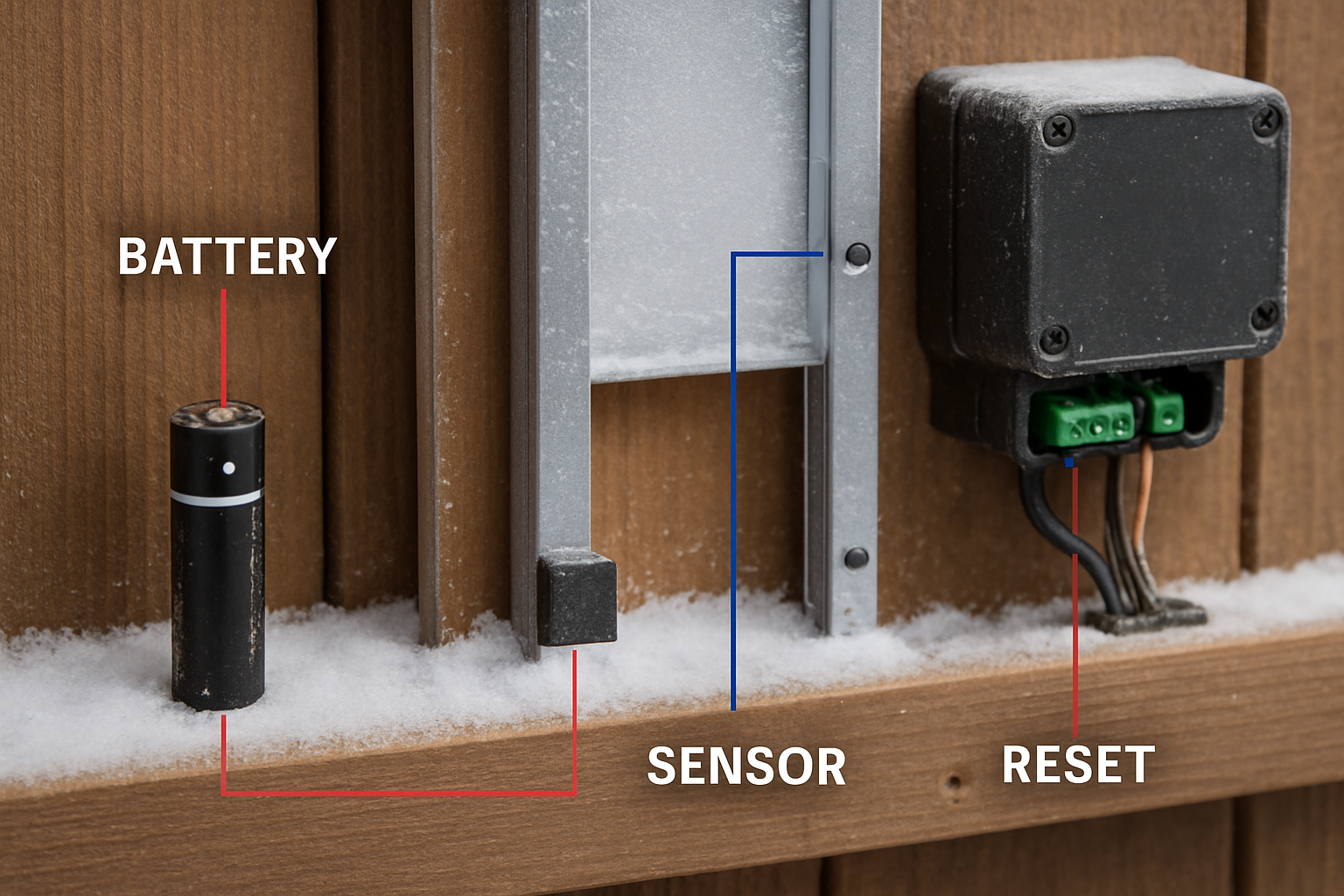
Alkaline cells fail in cold due to their aqueous electrolyte freezing, which increases internal resistance and reduces voltage. This prevents the battery from delivering the necessary amperage to start the gate motor. Lithium cells, with their dry internal construction, avoid this issue, maintaining consistent power output and preventing winter "low voltage stall" errors.
⚠️ The Ice-Binding Amp Draw Trap
Choosing the right battery chemistry is only half the battle. In extreme winter weather, a hidden battery drain occurs due to mechanical resistance. When flock condensation or driving snow hits the door tracks, it forms micro-ice crystals. Simultaneously, factory lubricants inside the gear housing stiffen. When the motor activates to lift the door, this resistance forces the motor to draw significantly higher current (amperage) than it does in the summer.
The Voltage Drop Equation: Even with a dry lithium cell, a sudden surge in amperage draw causes a temporary drop in operating voltage. If your door tracks are bound by ice, the combined amp spike can trip the system's "anti-pinch" or "low-power" safety sensors, locking your birds out in the dark.
Brand Configuration & Consumption Rules
Different automatic door models have varying power requirements:
- Run-Chicken T50: Uses a 2x AA configuration. Any voltage drop in alkaline batteries triggers a low-power warning.
- Omlet Smart Door: Uses a 4x AA configuration. While more cells provide a buffer, alkaline batteries still risk triggering cold-weather safety blocks if voltage drops below 1.2V per cell.
🌲 Structural Windbreak & Location Tactics
To protect your power cells and ensure the motor doesn't overwork itself, optimize the physical placement of the door mechanism:
- Internal Face Mounting: Whenever possible, mount the automatic door assembly on the inside wall of the coop run rather than the exterior. The ambient heat generated by the chickens and deep-litter bedding can keep the housing several degrees warmer than the outside air.
- The Mudroom Awning: Construct a small wooden overhang or a 3-sided "mini-mudroom" directly over the exterior exit. This blocks prevailing winds and prevents driving freezing rain from dripping straight into the slider tracks.
Consumables & Preventative Materials
To prevent cold-weather battery drainage and terminal failures, consider these upgrades:
- Energizer Ultimate Lithium AA Batteries: [INSERT_AFFILIATE_LINK_HERE] (Ideal for sub-zero performance).
- Dielectric Silicone Grease: [INSERT_AFFILIATE_LINK_HERE] (Apply to terminal springs to prevent moisture and rust).
- Dry Graphite Lubricant Spray: [INSERT_AFFILIATE_LINK_HERE] (Spray directly into the runner tracks. Unlike wet lubricants, dry graphite will not collect dirt or freeze into a sticky paste in sub-zero weather).
The Sub-Zero Winter Field Procedure
Winterize your automatic coop door power supply with these steps:
- Terminal Triage: Clean any corrosion or oxidation from contact plates with a brush.
- Apply Moisture Barrier: Use dielectric grease on terminal springs to seal out condensation.
- Track Prep: Clean the side tracks of all debris, then coat them with dry graphite spray.
- Install Lithium Cells: Insert fresh lithium AA cells and secure the housing gasket to ensure a watertight seal.
Operational Maintenance Checklist
- October (Pre-Winter): Replace all alkaline batteries with fresh lithium cells.
- Monthly (Winter Cycle): Check the battery chamber for moisture or condensation.
- April (Post-Winter): Test voltage levels and maintain lithium cells for continued operation through summer.
By choosing the right battery type, maintaining smooth track clearances, and following these winterization steps, you can ensure reliable operation of your automated coop doors in sub-zero temperatures, protecting your livestock and your investment.